Table of Contents
- Recognize the Physical and Mental Signs of Extreme Stress
- How Stress Affects Decision-Making and Judgment
- Immediate Techniques to Regain Mental Clarity
- A Decision-Making Framework for High-Pressure Situations
- Stress Management Techniques for Decision-Making
- Pressure Training Exercises to Build Resilience
- Team and Leadership Decisions Under Extreme Stress
- When to Seek Help or Escalate During a Crisis
- Frequently Asked Questions
Last Updated: October 8, 2026
Recognize the Physical and Mental Signs of Extreme Stress
Extreme stress hits body and mind at once: racing heart, scattered thoughts, shaking hands. Your nervous system is flooding with cortisol and adrenaline.
When stress peaks, your brain shifts into survival mode: the prefrontal cortex (logic and planning) goes quiet while the amygdala takes over. That’s why panicked decisions feel right in the moment but look terrible hours later.
Common physical signs include:
- Rapid heartbeat and shallow breathing
- Tunnel vision and difficulty focusing
- Muscle tension, especially in shoulders and jaw
- Nausea or stomach tightness
- Trembling or shaking hands
Mental signs are just as real:
- Racing thoughts that won’t settle
- Difficulty remembering information
- Extreme irritability or emotional numbness
- Sense of unreality or detachment
- Paralyzing indecision
Catching yourself in this state lets you pause before reacting.
How Stress Affects Decision-Making and Judgment
Stress narrows your thinking.
Your judgment suffers in specific ways under extreme stress:
Tunnel vision. You fixate on one possibility and ignore everything else. A manager under pressure might blame a single employee instead of examining the actual system failure.
Recency bias. You overweight recent events. One bad outcome makes you assume all future attempts will fail the same way.
Risk aversion. Stressed brains avoid risk obsessively, even when calculated risk is the smarter choice. You freeze instead of act.
Emotional reasoning. You treat feelings as facts. “I feel panicked, so this must be dangerous” becomes your decision logic.
Stress also impairs working memory, holding and manipulating information at once.
Immediate Techniques to Regain Mental Clarity
When decisions under extreme stress demand an immediate response, you need tools that work in seconds. These techniques interrupt the stress response and restore enough clarity to think.
Tactical Breathing for Instant Calm
Tactical breathing is used by military personnel, first responders, and ER doctors because breathing is one of the few nervous system functions you control consciously.
Your exhale activates the parasympathetic nervous system, “rest and recover” mode, counteracting the stress response. You’re not fighting the panic; you’re activating the system that cancels it.
Do this before making any major decision under pressure:
- Find a quiet spot if possible (even a bathroom works)
- Breathe through your nose if you can
- Focus only on the count, not the stressful situation
- After 3 cycles, your heart rate drops noticeably
Most people feel the shift within 60 seconds: hands steady, thoughts slow, survival mode off.
Grounding and Mindfulness Under Pressure
Grounding techniques snap you out of panic by anchoring you to the present moment. The 5-4-3-2-1 technique works well in high-stress situations:
Name 5 things you can see, 4 things you can touch, 3 things you can hear, 2 things you can smell, 1 thing you can taste.
This forces your brain to process sensory input instead of catastrophizing, it’s harder to spiral into “what if” when you’re focused on what’s here. Another option: press your feet into the ground and feel your back against the chair, pulling your mind back into your body.
Mindfulness under pressure isn’t meditation, it’s noticing without judging: “My heart is racing” instead of “I’m having a heart attack.” That shift creates space between feeling and response.
A Decision-Making Framework for High-Pressure Situations
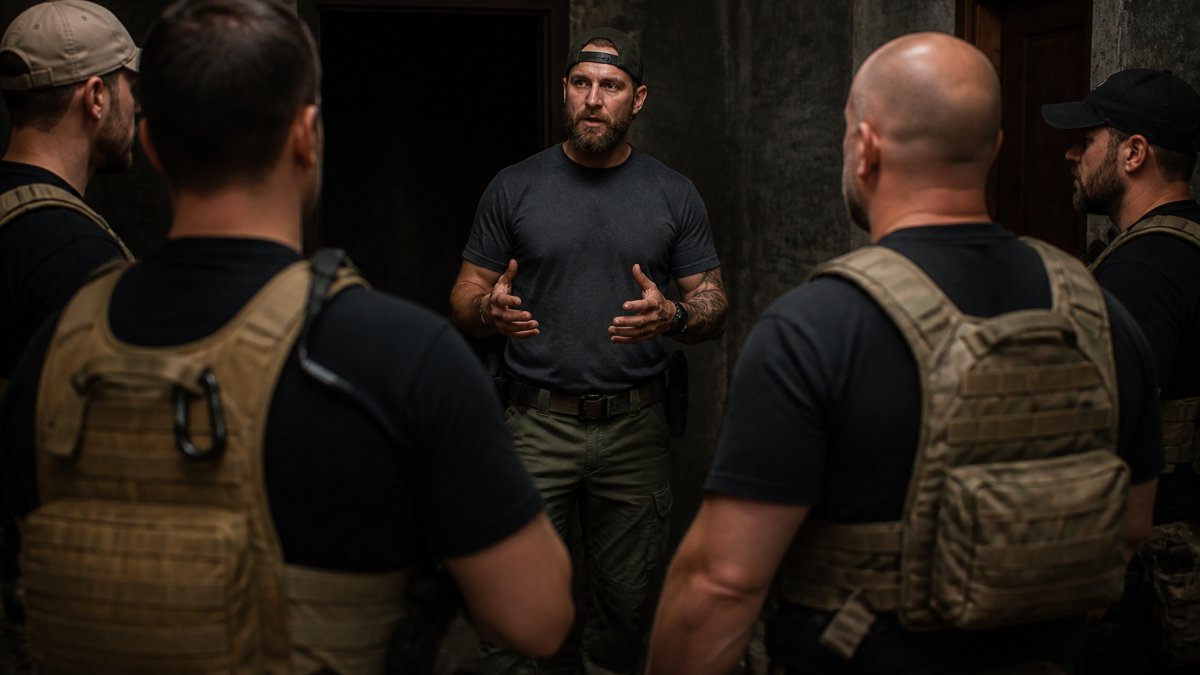
When you can’t delay a decision, you need a structure. This framework separates thinking from emotional reaction.
Step 1: Pause and Stabilize Your State
You need 60 seconds, not hours. Use tactical breathing or grounding to shift from panic to functional thinking. Ask: “What is my heart rate telling me right now?” That question pulls you into observation, noticing panic instead of drowning in it.
Step 2: Distinguish Reversible from Irreversible Decisions
This separates urgent decisions from crisis decisions. Most decisions under extreme stress feel permanent but aren’t.
Ask: “Can I undo this decision if it goes wrong?”
If no, it’s irreversible, cutting a key employee, publicly attacking a competitor, committing major resources.
For reversible decisions, you can move with 70% confidence. For irreversible ones, you need 85%+.
Step 3: Gather What You Know and Identify Gaps
You don’t need perfect information, just enough.
Spend 2-3 minutes listing what you know for certain, what you’re assuming, what you could learn in 5 minutes, and what you can’t learn in time.
This isn’t analysis paralysis. It’s clarity. You’ll often find that you know more than you thought, or that your assumptions are shakier than they seemed.
Ask one trusted person: “What am I missing?” A second perspective catches blind spots stress creates.
Step 4: Decide and Commit
Once you’ve done the work above, decide. Set a time limit, “I’m deciding in 10 minutes”, and stick to it.
State your decision clearly: “We’re doing X because of Y, and we’ll measure Z.”
Commitment is the antidote to second-guessing: stress makes you doubt every choice, and committing stops the spiral.
Document your reasoning so you can learn later: “We chose this because we believed X. Here’s what actually happened.”
Stress Management Techniques for Decision-Making
Generic stress advice, sleep more, exercise, eat well, treats stress management as separate from decision quality.
Schedule decision windows, not just work blocks. Constant availability keeps your nervous system on low-grade alert.
Eat on a schedule, not on appetite. Blood sugar swings flatten emotional regulation, and under stress appetite is unreliable.
Keep one or two trusted people in regular contact. Isolation amplifies stress and narrows perspective.
Treat these habits as maintenance on the machine that makes your decisions. Skipping them doesn’t just make you tired, it changes what you notice, what you weigh, and how quickly you commit.
Evidence-Based Decision Tools Worth Knowing
Once baseline stress is managed, keep a small set of tools to reach for depending on the decision.
Checklists. A checklist isn’t incompetence, it offloads memory under pressure, which is why aviation and surgical teams use them.
Pre-mortems. Before committing, imagine the decision already failed and write down why.
Reversibility triage. Before any tool, ask whether the decision can be undone. Reversible decisions deserve speed; irreversible ones deserve the full toolkit.
Match the tool to the decision. A checklist for routine high-frequency calls, a matrix for multi-option trade-offs, a pre-mortem for irreversible commitments. Using the wrong tool under pressure is its own kind of error.
Pressure Training Exercises to Build Resilience
Most articles stop at “practice staying calm”, useless the first time you face a decision with no option to delay. What’s missing is a concrete protocol for deciding under acute pressure: not just tolerating stress, but producing a usable decision while stressed.
These exercises come from aviation, emergency medicine, and military training. The common thread: they separate the stress response from the decision process so the two stop interfering.
The 90-Second Reset Drill
Before any high-pressure decision, run a fixed 90-second sequence. The point isn’t eliminating stress, it’s giving your brain a predictable on-ramp to thinking.
- 0-30 seconds: physiological downshift. Breathe in for 4, hold for 4, out for 4, hold for 4. Repeat three cycles. This is the same pattern taught to first responders and is sometimes called tactical or box breathing.
- 30-60 seconds: name the decision. Say out loud or write: “The decision is X. It is reversible / irreversible. The deadline is Y.” Naming converts a diffuse threat into a bounded problem.
- 60-90 seconds: pick the tool. Checklist, matrix, or pre-mortem, choose based on reversibility and stakes.
Practice on low-stakes decisions first (what to eat, which email to answer) so the sequence becomes automatic when stakes are real.
Scenario Simulation With a Timer
Mental rehearsal works only when it includes pressure. Set a 10-minute timer and walk through a realistic scenario, a key client threatens to leave, a team member resigns mid-project, a deadline moves up a week, and force yourself to produce a decision and one-sentence rationale before time’s up. The value isn’t the answer, it’s the repetition of deciding under a clock, until the clock feels like a boundary rather than a threat.
Decision Journals and After-Action Reviews
After any real decision under pressure, write three lines: what you decided, what you assumed, what actually happened. Review monthly. Patterns emerge fast, most people over-weight recent events or under-ask for input when stressed.
This mirrors after-action reviews in emergency services and the military: not blame, but calibrating future judgment.
Physical Stress Under Cognitive Load
Exercise that pairs physical strain with a thinking task, a brisk walk while rehearsing a hard conversation, a stair climb while reviewing a decision, trains the brain to keep reasoning online when the body signals alarm. It maps directly to the moment you need it.
Team Rehearsal, Not Just Individual Practice
Teams that rehearse together decide better together. Run short tabletop exercises: one person decides, one tracks assumptions, one watches for overload. Rotate roles. The goal isn’t the “right” answer but the shared vocabulary and trust that make real-time coordination possible.
Resilience training is not a substitute for rest. Repeated exposure to stress without recovery builds sensitivity, not tolerance. Schedule recovery as deliberately as you schedule the drills.
Team and Leadership Decisions Under Extreme Stress
Individual decisions are hard. Team decisions under extreme stress are harder.
Establish clear authority. Before pressure hits, decide who decides.
Communicate the frame, not just the decision. Tell your team why, not just what.
Assign one person to track assumptions. Under pressure, teams operate on different mental models.
Separate the decision from the execution. Once decided, move to action.
Debrief after. The best learning happens after high-stress decisions: What worked? What surprised you?
When to Seek Help or Escalate During a Crisis
Some decisions under extreme stress are too big or uncertain for the people in the room.
Escalate when:
- The decision affects safety or legal exposure
- You lack critical expertise the situation requires
- The stakes exceed your authority
- You’re noticing signs of severe stress (inability to think, dissociation, panic attacks) in yourself or your team
Seeking help isn’t failure. It’s judgment.
Professional support, crisis consultant, legal advisor, or mental health professional, isn’t weakness. It’s a tool. Use it.
Echo Sierra Tactical builds this skill through immersive training that simulates real pressure.
The decisions that matter most happen when you’re least comfortable. Train now, and you’ll think clearly when it counts.
Frequently Asked Questions
How can I make better decisions when I am under extreme stress?
Use a structured framework: pause to stabilize your state through breathing, distinguish reversible decisions from irreversible ones, gather what you know versus what you don’t, and then decide and commit. The key is separating your emotional response from the decision itself. Reversible decisions allow you to act faster because mistakes can be corrected. Irreversible ones require more deliberation. By creating this mental separation, you bypass panic and access clearer judgment even when stress is high.
How does stress affect decision-making?
Extreme stress narrows your focus, triggers reactive thinking, and floods your system with cortisol and adrenaline. This sharpens reaction time but clouds judgment and impairs your ability to weigh options or consider consequences. Stress also increases tunnel vision, making you fixate on worst-case scenarios or miss important information. Your prefrontal cortex, responsible for planning and reasoning, becomes less active. Recognizing these effects helps you counteract them through deliberate pause, breathing, and structured decision protocols.
What should I do if I have no time to pause before making a critical decision?
When delay is impossible, rely on pre-planned decision rules and muscle memory. This is why pressure training exercises are valuable: they let you rehearse decisions in advance so your body and mind respond automatically under stress. In the moment, take the smallest pause you can, even 5-10 seconds of tactical breathing. Identify the one irreversible consequence you must avoid, make your call based on that, and move. Speed and clarity trump perfect information in truly urgent situations.
How can I practice making decisions under pressure?
Immersive pressure training exercises, like realistic tactical scenarios with time constraints and opposition, force your brain to make decisions while stressed. These exercises build resilience and mental agility by repeatedly exposing you to high-stakes situations in a controlled environment. You learn to recognize your stress response, apply breathing and grounding techniques, and execute your decision framework while adrenaline is running. Over time, your nervous system becomes less reactive and your decision quality improves even in real emergencies.